



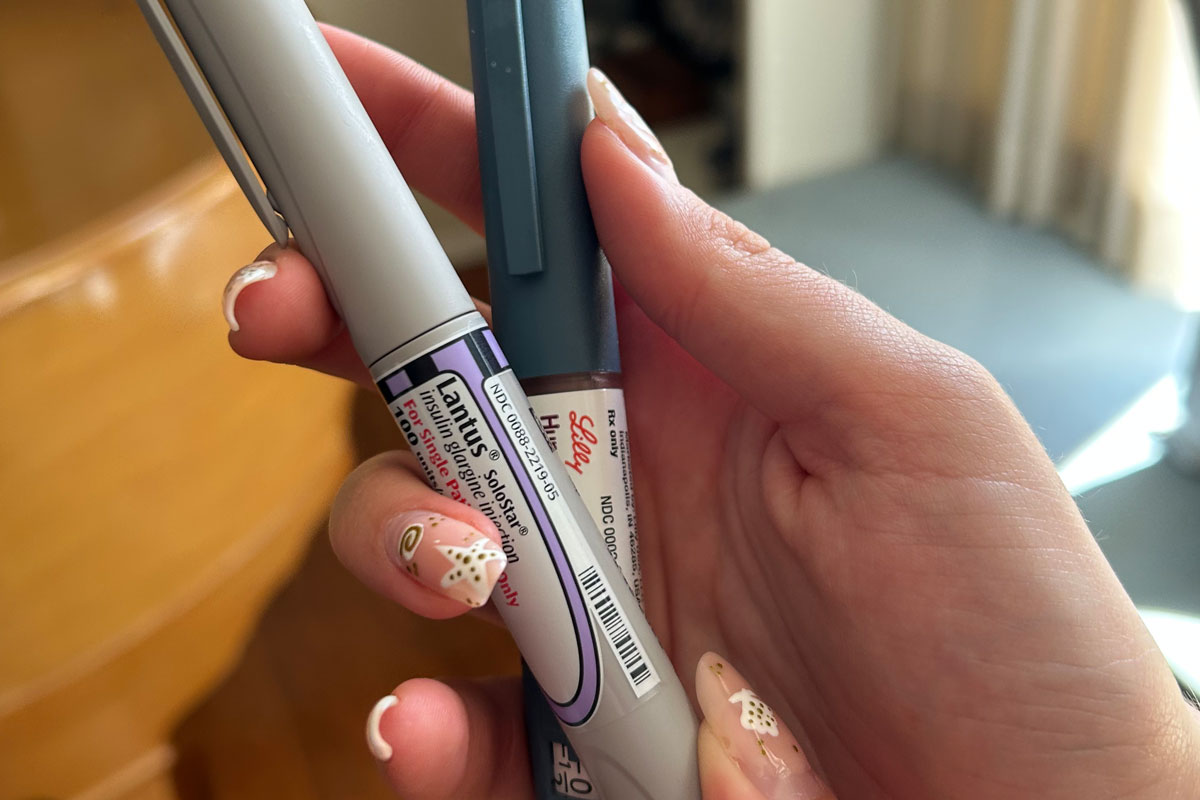
15 Aug Back to Injections? How to Make Contingency Plans for Pump Failures
By a T1D Mom Who Has Learned to Plan for Plan B
If you’re raising a teen with type one diabetes (T1D), you probably already know that the to-do list never really ends: Tech updates, backup sensors, school nurse coordination, midnight lows, etc. Somewhere along the way, you start thinking like a logistics manager for a one-person, 24/7 pancreas replacement operation.
A few weeks ago, we were preparing for a trip to New England, and I was thinking about diabetes scenarios and our contingency plans. What if Ellie’s pump fails while we’re traveling?
This isn’t just anxiety talking. Pumps are incredible, but they’re not perfect. We were traveling in Europe last summer, and I recognized the need for a backup plan, as the idea of trying to troubleshoot tech support across time zones made me feel queasy. So, we did something radical: we prepared for the possibility that we might need to switch to injections while away. Just in case. Now, we do it each time we travel.
We talked with our endocrinology team ahead of time and asked two key things:
- Could they calculate a basal dose (long-acting insulin) for Ellie in case we needed to use injections?
- Did they have any loaner pump programs we could access before traveling?
The answer to both was yes. (Cruises and overseas travel qualify for loaner pumps from Ellie’s device manufacturer–Tandem.) We departed for England with a basal plan, backup insulin pens, a list of pump settings, and a temporary loaner pump in our suitcase. We didn’t end up needing any of it, but knowing we were ready made the trip less stressful for everyone.
Having a backup strategy for switching to multiple daily injections (MDI) made all the difference. Not just logistically, but emotionally. Ellie knew what to expect. We weren’t panicking. And honestly? That kind of peace is priceless.
So, whether you’re planning ahead for travel, prepping for the unexpected, or just curious how to make MDI less overwhelming in a pinch, here’s what helped us and what Ellie does before traveling.
First, Let’s Talk Basal Insulin
If you’ve been on a pump for a while, you might have forgotten what basal insulin looks like in the injection world. On a pump, basal insulin trickles in all day in tiny micro-doses. With MDI, you mimic that with one or two shots of long-acting insulin—like Lantus, Tresiba, or Levemir.
Here’s what you need to know:
- Basal = background insulin. It’s not tied to meals. It’s what keeps your blood sugar from creeping up when you’re not eating. Bolus sounds like “bowl” and is the insulin you give with meals and snacks.
- You’ll typically take basal once a day (sometimes twice, depending on the type and your body).
- The dose should ideally be based on what your pump was giving you hourly over 24 hours—but it’s never a perfect 1:1.
If you don’t know your dose, call your endo. Seriously. You’re not being annoying. They want you to stay out of DKA and feel okay.
The “Oh No, My Pump Died” Checklist
It’s way easier to cope when you’re not scrambling. Keep this checklist handy for whenever life throws you a diabetes curveball.
Have these on hand:
- Long-acting insulin (your basal); we needed a separate prescription for this because Ellie had transitioned to the pump years ago and did not need Lantus on a daily basis.
- Short-acting insulin (for meals and corrections).
- A copy of your dose sheet (ask your provider if you don’t have one).
- Syringes or pens with needles; you probably already have pens and needles that you use to treat moderate or large ketones.
- Alcohol swabs (no judgment if you don’t always use them).
- A backup meter and strips (CGMs are great until they aren’t).
Know these numbers:
- How much basal insulin you need
- Your insulin-to-carb ratio
- Your correction factor (how much insulin lowers your BG)
- What your personal DKA red flags look like
- Note: We have a hard copy of Ellie’s pump settings—bolus ratios, correction factors, basal rates—all of it! For Ellie, these numbers change throughout the day, so we keep a written record. You can also have your teen scroll through pump settings and take pics on your phone.
Emergency plan:
- Your endo’s phone number saved and easy to find
- Local pharmacy hours (for refill emergencies)
- Pump customer support number (for eventual repairs or replacements)
Real Talk: MDI Is Different (Not Worse, Just Different)
A few years back, when Ellie had a different pump, there was a recall. In some cases, the battery cap became loose, which could cause the pump to lose power and stop insulin delivery. The company sent a new pump ASAP. (We were grateful that we had the record of all Ellie’s pump settings to enter into the replacement pump.) For that extremely brief period, Ellie switched back to MDI. It takes more mental math. We noticed little things—like forgetting you don’t have basal automatically running in the background. If you accidentally miss your long-acting dose, your blood sugar will spike fast.
Some tips that saved us:
- Set a reminder on your phone for your basal shot. Missing it even once is brutal.
- Pre-bolus like it’s your job. MDI doesn’t have the tiny tweaks pumps allow. Giving your insulin 10–15 minutes to start working before you eat helps avoid post-meal spikes.
- Keep track. Jot down your doses (in your notes app or an old-school notebook). It’s easier to troubleshoot highs or lows when you know what you actually took and when.
- Remember that MDI is not a downgrade. It’s a different way to manage diabetes. Some people use MDI full-time and do great.
- Give yourself grace. Blood sugars will bounce. Insulin isn’t an exact science, no matter the delivery method.
Quick “Glad I Knew This” Tips
- Long-acting insulin doesn’t kick in instantly. It might take a few hours. Plan accordingly.
- Short-acting insulin wears off in ~3–5 hours. If you’re used to micro-corrections via pump, try not to stack doses.
- Don’t wing it if you’re unsure of your dosing. One call to your provider is better than a night in the ER.
- Ellie’s continuous glucose monitor (CGM) made the brief use of MDI easier for us. If you’re not using a CGM, finger sticks are your best tool. No shame in checking 8+ times a day.
Final Thoughts: Backups Aren’t Optional—They’re Empowering
Traveling with T1D means packing more than just chargers and snacks; you’re also carrying the weight of what-ifs. While pumps are incredible tools, they’re still technology. They can break or malfunction. That’s why having a contingency plan for pump failure isn’t just smart; it’s essential.
Preparing to switch to injections on the fly doesn’t mean expecting the worst—it means being ready for anything. Whether it’s a trip across the country or a girls’ weekend, knowing your backup plan (and your backup’s backup) can turn a potential emergency into a manageable inconvenience.
More importantly, it gives your child confidence. It gives you peace of mind. And it turns a last-minute scramble into a calm, collected moment of “We’ve got this.” Because you do.
So before your next trip, do the prep: Get that basal plan, fill the extra prescriptions, talk to your endo, and pack that emergency stash. Hopefully, you never need to open it, but if you do, you’ll be ready.
And in this ever-changing world of T1D parenting, readiness is everything!–Megan
Important: This post is based on personal experience and is not a substitute for medical advice. Always consult your endocrinology team before making changes to your diabetes management plan.