
26 Feb Speaking to Future Dietitians: A T1D Patient’s Perspective
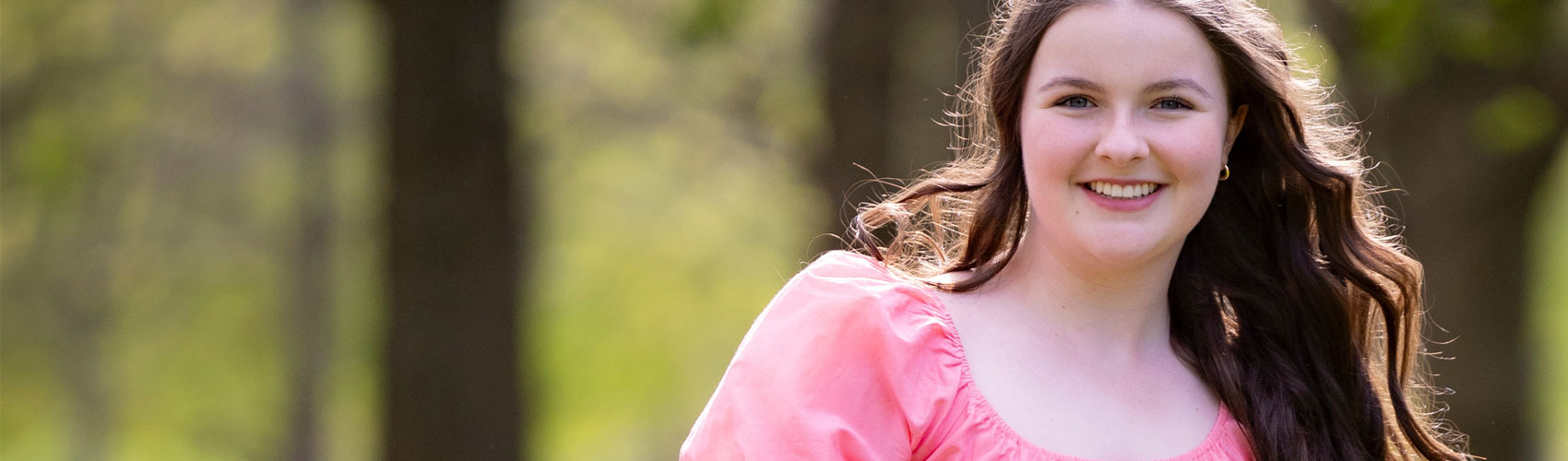
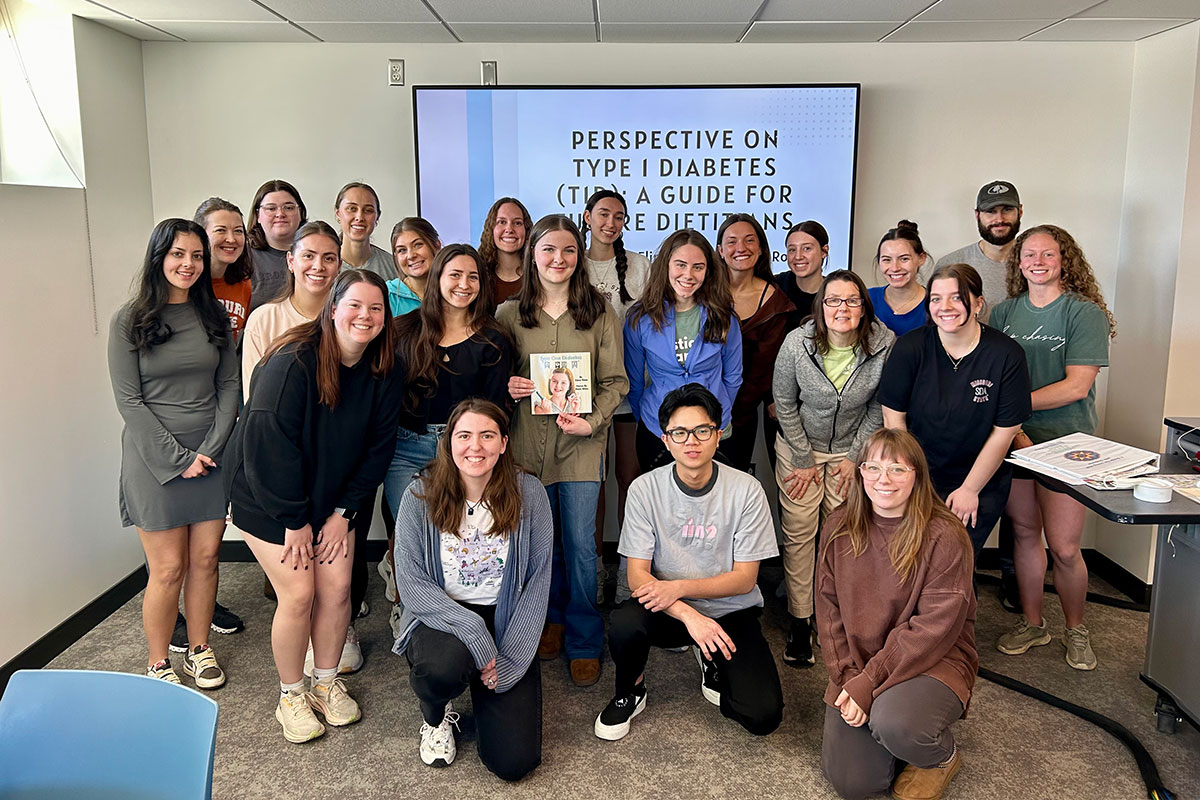
I recently had the privilege of speaking to a class of future dietitians at Missouri State University. I shared my personal experience as someone with type one diabetes (T1D). I was deeply moved by their warm reception, thoughtful questions, and dedication to understanding the complexities of managing T1D.
We focused a lot on the newly diagnosed, discussing how dietitians play a crucial role in the early stages of T1D by teaching carbohydrate counting, insulin adjustments, and ways to manage blood glucose levels. But, it’s not just about the numbers—dietitians also provide emotional support, listening to patients’ struggles and offering practical solutions.
Living with T1D involves adjusting your relationship with food—eating to treat lows when you’re not hungry, counting carbs with every meal and snack, and sometimes avoiding new foods out of fear of dosing incorrectly. Dietitians help me navigate these challenges, empowering me to see food as both fuel and something to enjoy. With guidance from a dietitian, it’s much easier to shift food from a source of stress to another tool for helping manage T1D.
I also highlighted how dietitians help people at every stage of T1D, supporting patients with varying dietary needs and helping them maintain confidence and healthy blood glucose levels over time. Dietitians are key to improving not just physical health, but overall quality of life.
A special thank you to Natalie Allen, MEd, RDN, LDN, Clinical Associate Professor Dietetics Program, School of Health Sciences, and Team Dietitian, Athletics Department, Missouri State University. Mrs. Allen invited me to speak to her class and has helped me since my diagnosis in 2016. It was an honor to share my journey with such a passionate and empathetic group of students. The future of dietetics looks bright, and I’m excited to see how these dietitians will continue to make an impact in the lives of people with T1D.
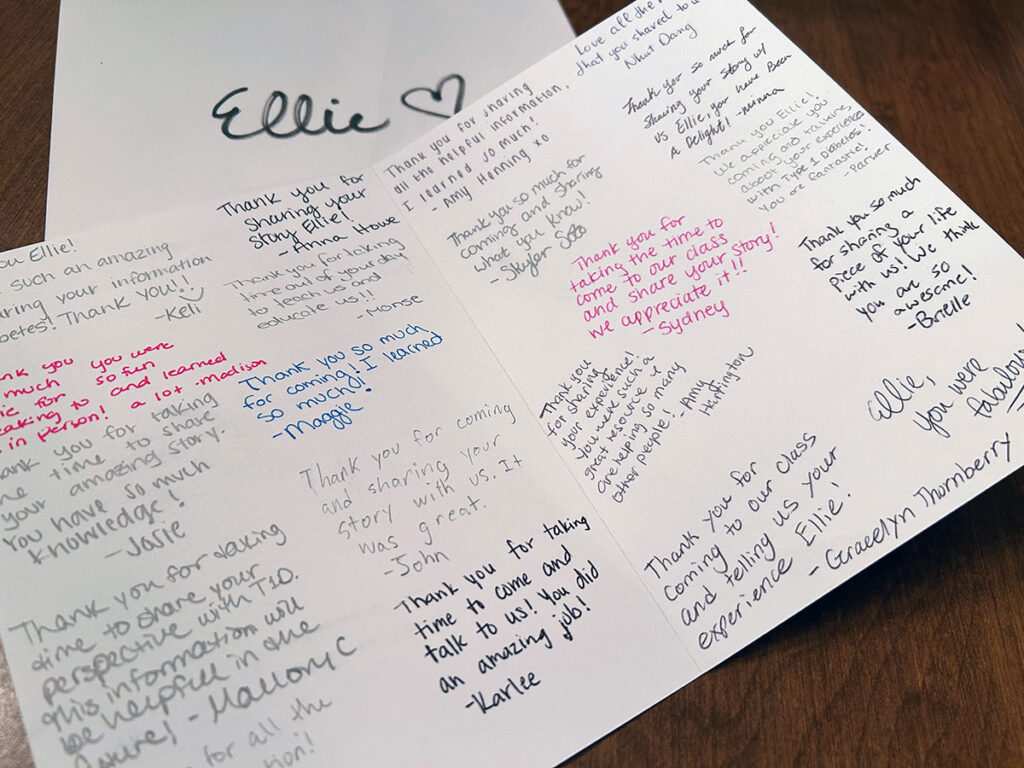
The future of dietetics is bright with so many kind, smart, and compassionate individuals ready to make a difference. We are so grateful for the opportunity to learn from you! Thank you for the warm welcome.
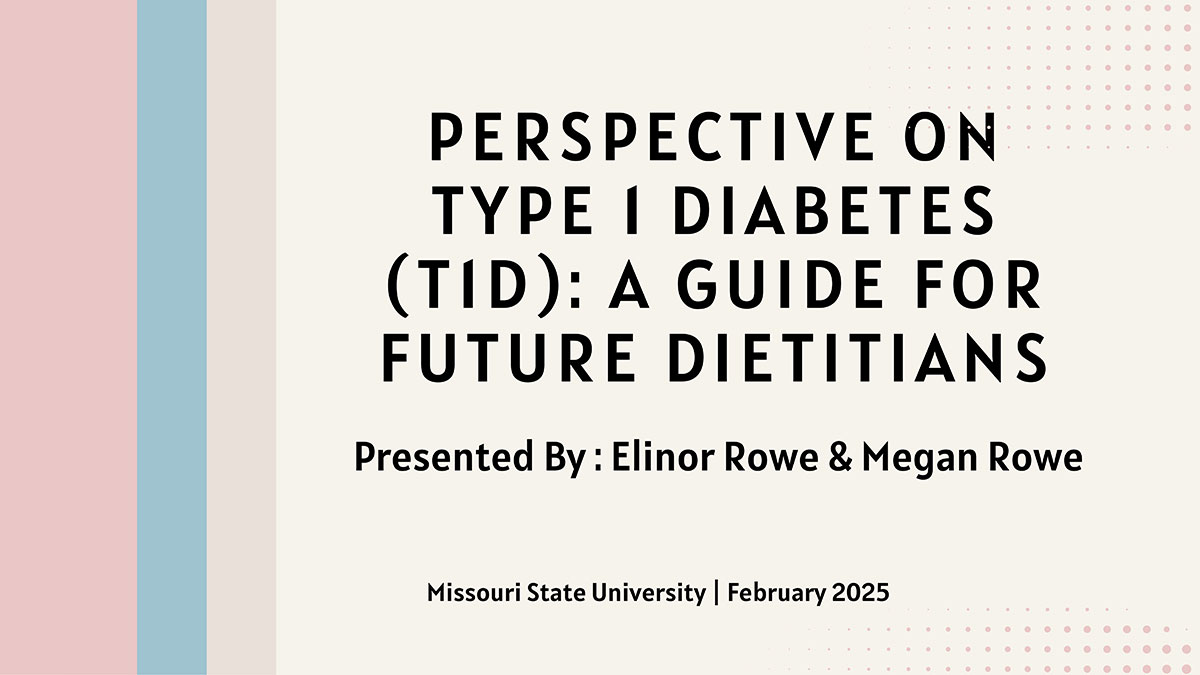
My mom joined me to fill in some of the gaps from the early days of my diagnosis and to share a parent’s perspective. Thanks, Mom! For anyone interested, I’ve included a link to the presentation.
And, thank you again to the class and Professor Allen for this wonderful opportunity. –Ellie